

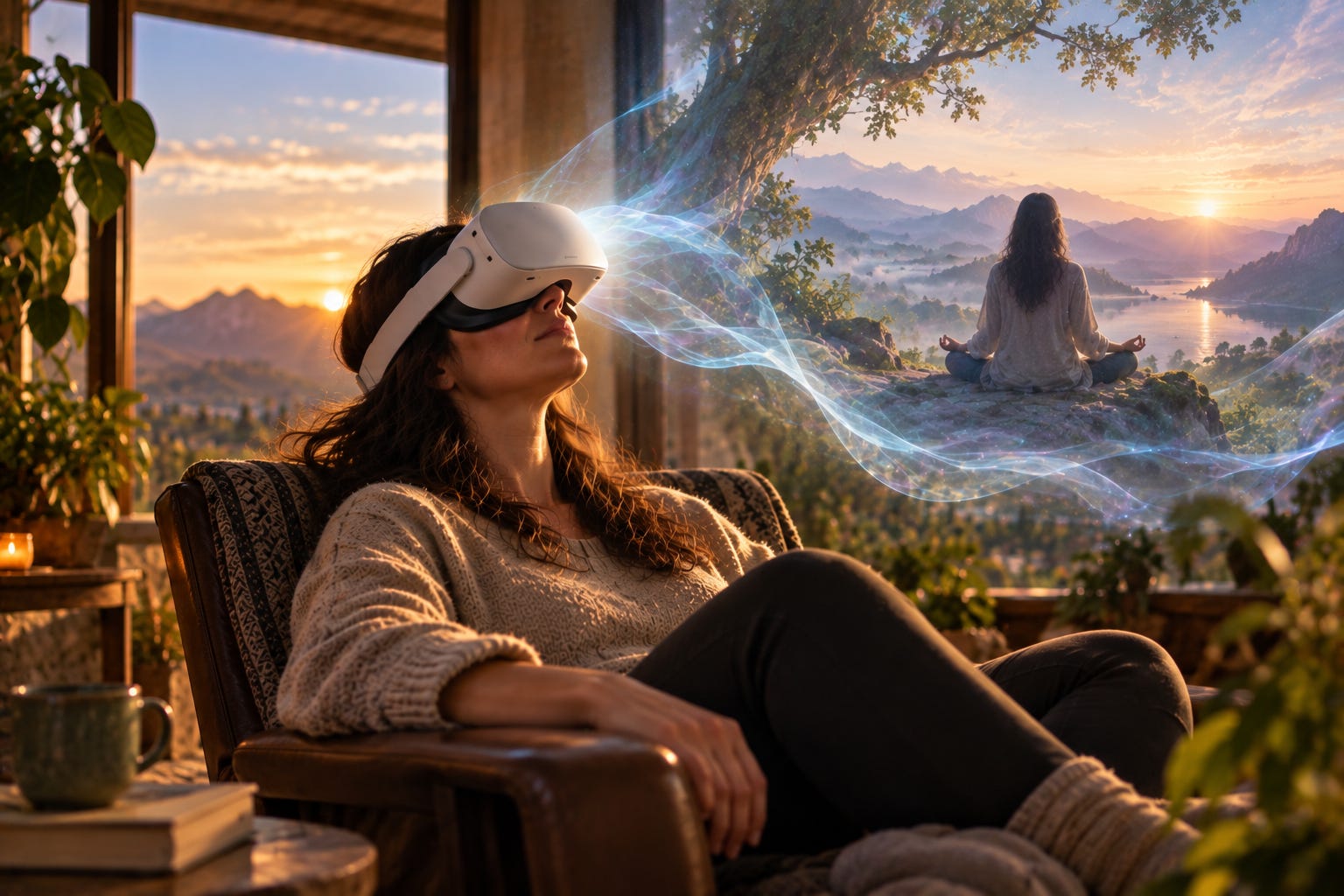
I have always had a somewhat expansive definition of technology. We tend to hear the word and picture the newest thing in the room: a phone, a headset, an artificial intelligence, some glowing machine with a cord coming out of the back. But technology seems much older and stranger to me than that. Human beings could always have flown; the physics were sitting there patiently while we remained on the ground. Fire was possible before we learned to make it, and so were the wheel, written language and the microscope. None of those inventions changed what reality allowed. They changed what we understood how to do with it.
Even the word technology points toward something broader than electronics. We can pull it apart into its Greek roots: technē, meaning something like art, craft or skill, and logia, related to study, discourse or a body of knowledge. I don’t want to make the etymology carry more philosophical weight than it should, but I love the older idea hiding inside our modern word. Technology can be understood not merely as machinery, but as the knowledge and practice of a craft, a way human beings learn to work with possibilities that were there before we knew how to reach them.
That definition gives me room to think about technologies that don’t plug into anything. Meditation is a technology of attention. Breathwork is a technology for working with the body and nervous system. Ritual can be a technology of meaning, just as drums, chanting, fasting and dancing have long been technologies for changing consciousness. A virtual reality headset certainly qualifies, but so does learning how to close your eyes, follow your breath and discover that your own mind is considerably larger and weirder than you had imagined. Once I began thinking this way, it became difficult not to notice how many of the tools I had spent my life working with were circling the same mystery from different directions.
This is why I’ve become interested in the existing idea of sober psychedelics, a term I find useful for technologies and practices capable of creating non-ordinary states that have some meaningful overlap with psychedelic experience without taking a psychedelic substance. I want to make the distinction clear from the beginning because I don’t think these things replace psilocybin, LSD, MDMA, ayahuasca, ketamine or the other medicines people place under the psychedelic umbrella. I work professionally with psilocybin, and if anything, that work has increased my respect for how powerful and unpredictable the medicine experience can be. Sober psychedelics interest me because they occupy neighboring territory. They can alter perception, deepen inward attention, generate awe, make the ordinary boundaries of consciousness feel more permeable, and give us an opportunity to practice what happens when we don’t completely understand what is happening to us. They aren’t the same country, but sometimes you can see across the border.
A little rehearsal for letting go
One of the hardest things about preparing someone who has never taken a psychedelic is that eventually language fails. I can explain changes in perception and time. I can tell someone that beautiful things can become overwhelming, frightening things can sometimes become meaningful, and trying harder to control an experience can occasionally make it more difficult. We can talk for hours about surrender and curiosity and trusting the experience, but at some point it begins to feel like explaining swimming to somebody who has never been in water. They understand every word, but they still haven’t felt themselves float.
Virtual reality can sometimes give us a little pool in which to practice. I founded EvolVR, a virtual-reality meditation community that was eventually acquired by TRIPP, where I later served as VP of Community and live events. I should disclose that history because I still love the company and respect what they’re building, and I continue using TRIPP in my facilitation work because some of its experiences do something that is very difficult to accomplish through explanation alone. You put on the headset and the ordinary room disappears. Suddenly we can talk about immersion after you’ve actually been immersed. My path through meditation, spiritual care, technology and eventually licensed psychedelic facilitation is an unusual one, but those pieces make more sense together than they might initially appear. That’s part of the story I tell on my About Jeremy page.
One of my favorites to use with psychedelic-naive clients is TRIPP’s Journey: An Homage to Ram Dass. It begins with an intimacy that feels almost like sitting with Ram Dass while he teaches, and then the environment starts to change as he begins talking about his own psychedelic experience. I won’t describe too much because discovering what happens is part of its beauty, but eventually you aren’t simply hearing somebody talk about altered consciousness while sitting in a chair. The visual world around you has become fluid and impossible. Scale and space stop behaving normally. His voice and the world you’re inhabiting begin interacting, and this beautiful teaching becomes something you are experiencing with your body and senses rather than merely understanding with your intellect. You can watch a 2D version of the immersive VR experience on youtube.
What interests me most happens after the headset comes off. Now I can ask a client what they did when the world became strange. Did they immediately try to figure it out? Did they want to pull the headset off? Could they enjoy not knowing what was coming next? Was there a moment when they stopped observing and allowed themselves to be carried by it? None of their answers predicts what will happen with psilocybin, and I would never suggest that twenty minutes in VR tells somebody what a six-hour medicine journey will feel like. But now we have felt around one small edge of the elephant together, and we have a language we didn’t have before.
There is something quieter happening underneath the spectacle too. TRIPP is teaching meditation, breath and attention inside these immersive environments, and for some people that works better than beginning on a cushion in a quiet room. I’ve led thousands of meditations over the years, and I have no particular allegiance to the furniture on which somebody learns to meditate. If a person who has always thought they were terrible at meditation discovers how to follow their breath because someone first placed them inside a beautiful impossible universe, I’m delighted. What matters to me is that when a later medicine experience becomes enormous, finding the breath isn’t an idea they’ve heard me describe. It is something their body has practiced.
Light behind closed eyes
Another doorway into this territory looks almost absurdly simple: light. My friend Michael Pottern has created a remarkable environment at the Denver Zen Den, where he combines hypnagogic light with vibroacoustic beds, carefully designed sound, binaural audio and other sensory technologies. You lie down, close your eyes, put on the headphones, and patterned light begins moving across your closed eyelids. Yet what can appear behind them doesn’t feel much like staring at a light. There can be extraordinary color, tunnels, geometry, movement and a sense of internal space that seems far larger than the physical room you’re lying in.
I find this especially interesting because there isn’t one single technology doing all the work. Light is interacting with sound, vibration is moving through the body, the bed itself becomes part of the sensory field, and the ordinary external world gradually becomes less important. I’ve seen people come out of these experiences blinking and searching for language, trying to explain something that seemed to happen partly in images and partly in sensation. That moment feels familiar to me from psychedelic work: the little pause when somebody has clearly experienced something but hasn’t yet figured out how to turn it into a story.
The Zen Den can be useful before a medicine journey for many of the same reasons I use VR, but I find it particularly intriguing for integration. One of the strange things about a psychedelic experience is how quickly something enormous can begin to recede. During the journey an image, realization or feeling may seem more vivid than ordinary life, and then you sleep, eat breakfast, answer emails, pick up the dry cleaning, and ordinary consciousness begins rebuilding itself around you. Returning to an immersive inward environment of light, sound and vibration can sometimes help someone become quiet enough to approach that experience again. I don’t mean recreating the journey, because I don’t think we can or should try to do that. I mean creating conditions where a half-remembered image, bodily feeling or emotional thread might become accessible enough to follow.
The technology we carry inside us
The farther I follow this idea, the more I find myself returning to technologies humans have been carrying around for thousands of years. Breath is the obvious one, and meditation is another. We learned long ago that changing how we breathe, where we place attention, how we move, what we repeat and how we construct ritual can change our experience of consciousness, and none of that becomes less sophisticated simply because it is ancient.
These practices are some of the most useful tools I bring into psychedelic preparation. Sometimes I use something as simple as box breathing. Sometimes I guide a meditation around an intention or invite someone to practice bringing a particular person, ancestor, memory or question into awareness. The important part is that we do it beforehand. If someone becomes frightened, confused or simply overwhelmed during a medicine journey, that is not the ideal moment for me to explain an unfamiliar breathing exercise to them. I would much rather remind them of something we’ve already done together, something their body recognizes even when the more analytical parts of their mind are temporarily somewhere else. Breath and meditation become a trail we’ve walked before, and sometimes finding that familiar trail is enough to help someone remember where center is. This kind of preparation sits alongside the more formal screening and safety work I do before deciding whether a journey should happen at all, which I describe in more detail on my Safety & Screening page.
That idea of practicing before and returning afterward is also what led me into one of the newest technologies I work with. I am building KetReady, a preparation and integration platform for people receiving ketamine treatment, because there is a gap in the way ketamine is often delivered that troubles me. Many people receive the medicine with little meaningful preparation beforehand and very little structured integration afterward. KetReady uses carefully designed and guardrailed AI guides, alongside journaling, meditation, breathwork and reflective practices, to help people arrive more intentionally and then spend time making sense of what happened rather than simply walking back into ordinary life and hoping the important pieces stick.
AI raises a particularly important boundary for me because, unlike a light or a headset, it can sound human. I have no interest in pretending that an AI guide is equivalent to a skilled human being who knows you, cares about you and can sit beside you through uncertainty. The reason I’m interested in KetReady is that in many cases the comparison isn’t AI versus a wonderful human integration therapist. The comparison is thoughtful, affordable support versus no preparation or integration at all. If somebody already has excellent human support, I would never want technology to push that person out of the room. I’m interested in technology where it can fill an empty chair, notice themes across someone’s journaling, ask useful questions at two in the morning when an insight has suddenly returned, or help someone establish a meditation practice they otherwise wouldn’t have.
What technology is for
All of this has made me less interested in drawing a hard line between ancient practices, modern machines and the medicines themselves. LSD and MDMA are human-made compounds. Psilocybin mushrooms grow perfectly well without us, although humans have developed sophisticated practices around cultivating, preparing and using them. Ayahuasca is itself a remarkable human discovery involving the combination and preparation of plants. I don’t think any of that makes these experiences equivalent, and their risks, depth, evidence and power are certainly not interchangeable. What interests me is the much older human impulse underneath all of them: we keep discovering ways to alter the conditions under which consciousness encounters itself.
For me, that is where sober psychedelics belong. I don’t dream of a future in which we finally build a headset or light or AI so sophisticated that nobody needs psychedelic medicine anymore, just as I don’t dream of an AI so convincing that we no longer need another person sitting beside us. I want these technologies to help someone approach an unfamiliar experience with a little more confidence, give them something practiced to reach for when the experience becomes difficult, and create ways of returning afterward to what they saw and felt before ordinary life covers it over. Sometimes technology can make a doorway easier to approach, or help us remember what happened after we walked through it, without pretending to be the doorway itself. That’s also why the psilocybin work I offer through Front Range Psychedelic Therapy is built around preparation, the medicine day itself and integration rather than treating the medicine as the whole experience.
I’ve spent a substantial part of my life fascinated by technology, from virtual worlds and virtual reality to artificial intelligence, and another substantial part sitting with people through experiences that no technology can tidy up: illness, death, grief, fear, love, awe, spiritual uncertainty and, now, psychedelic journeys. Increasingly those two parts of my life don’t feel opposed at all. They seem to be asking the same question about what helps a human being become available to something that was possible all along. Sometimes the answer is a headset or a light, sometimes it is an algorithm, a meditation or a mushroom, and sometimes it is another human being sitting quietly beside you, knowing when to offer something and when to simply stay.
And if you think you’re ready to explore psychedelic-assisted therapy, with or without all this technological mumbo jumbo, you can schedule a free consultation with me here.